If you’re considering extending your home, you may be wondering about the best way to do so. While there are many options available, one popular choice is to use steel frame extensions. In this article, we’ll explore the pros and cons of using steel frames compared to conventional building methods and why steel frames are particularly useful for building close to existing buildings. We’ll also discuss the foundation requirements of each.
Pros of Steel Frame Extensions
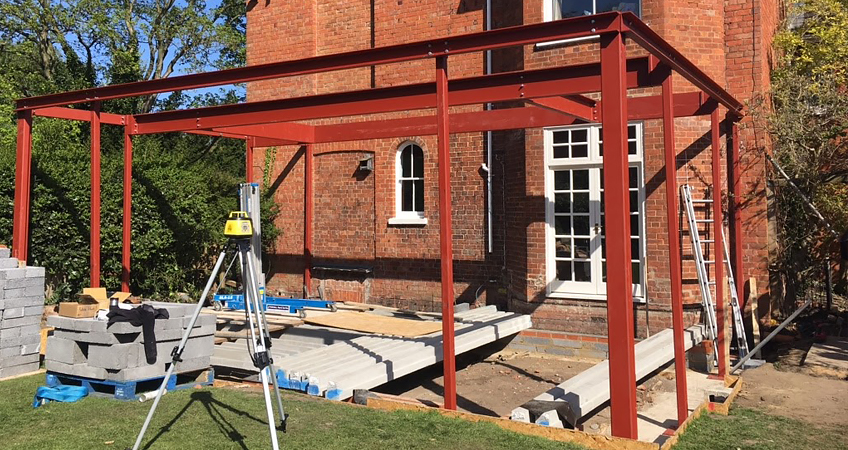
- Speed of Construction: Steel frame construction is a fast process, with many components prefabricated off-site. This means that your extension can be erected in a matter of days, which is much quicker than traditional methods.
- Durability: Steel is a highly durable material that is resistant to fire, rot, and pests. It will also not warp, split, or crack like timber, making it a long-lasting choice for your home.
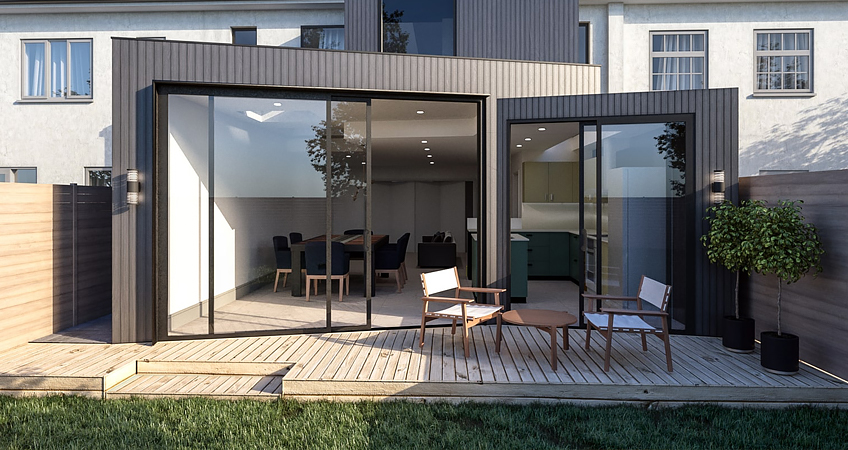
- Flexibility: Steel frames can be designed to almost any shape or size, giving you the freedom to create a unique and bespoke extension.
- Sustainability: Steel is a recyclable material, which makes it an environmentally-friendly choice for your home. In addition, steel frame extensions have high thermal efficiency, reducing your energy costs.
Cons of Steel Frame Extensions
- Cost: Steel frame extensions tend to be more expensive than traditional building methods, although this cost can be offset by the speed and efficiency of construction.
- Noise: Steel frames can be noisy during construction, which may be disruptive if you live in a densely populated area.
- Weight: Steel frames are heavy, which means that you may need to reinforce your existing foundations to support the extra weight.
Why Steel Frames Are Ideal for Building Close to Old Buildings
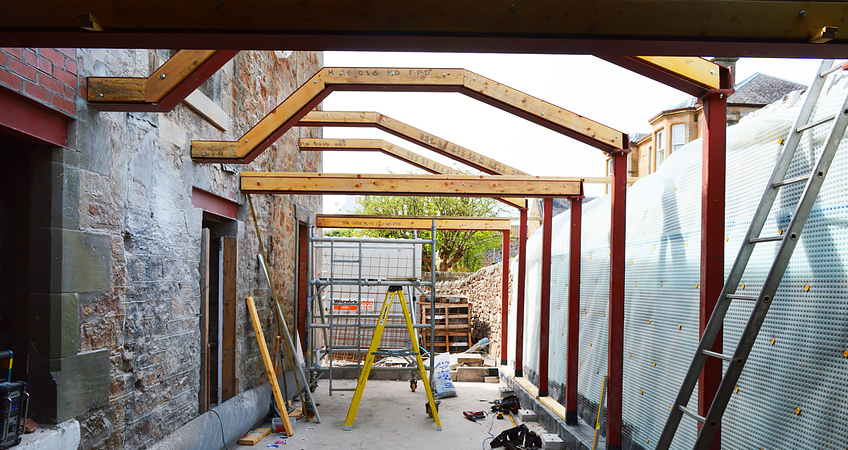
Steel frame extensions are a popular choice for those who want to build close to an existing building, as they are lightweight and can be designed to work around any obstructions. This means that you can extend your home without compromising the integrity of the existing building, which is especially important if it’s a listed building or of historical significance.
Foundation Requirements
For conventional building methods, the foundation needs to be made of solid material, such as concrete or masonry. This provides a strong base for the structure and helps to distribute the weight evenly. Steel frame extensions, on the other hand, require a slightly different approach. The foundations need to be reinforced to support the extra weight of the steel frame, but this can be done using steel beams or reinforced concrete.
In conclusion, steel frame extensions offer a number of benefits, including speed of construction, durability, flexibility, and sustainability. However, they can also be more expensive and noisy during construction and may require reinforced foundations. If you’re building close to an existing building, steel frames are a particularly good choice, as they are relatively lightweight compared to bricks they can be designed to work around any obstructions. Ultimately, the choice of building method will depend on your individual requirements, so it’s important to weigh up the pros and cons carefully before making a decision.