
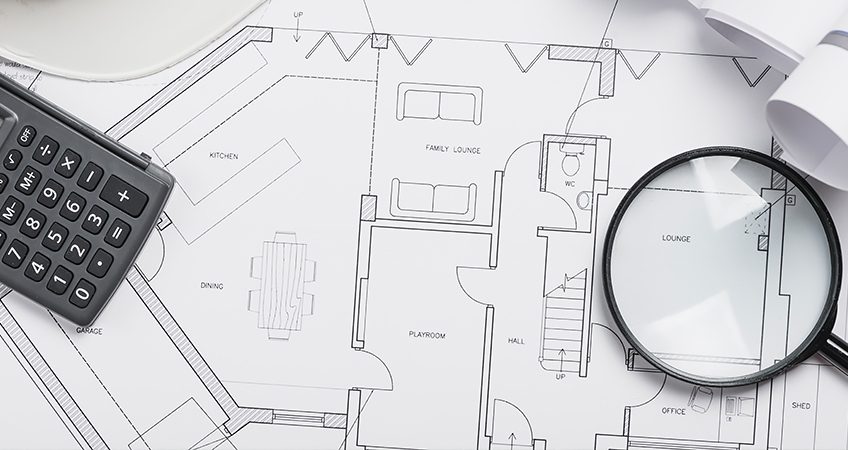
If you ask a builder to price a job before your design and specs are nailed down, you’ll either get a guess (which grows later) or a padded number “just in case.” Both cost you. The right sequence saves weeks of back-and-forth and can shave thousands off the final bill.
Below is the simple, proven order of play.
1) Lock in proper working drawings (not just planning drawings)
Planning drawings are for permission. Working/construction drawings are for building and pricing. You’ll need:
Fully dimensioned plans, sections and details
Building notes and specifications (materials, finishes, performance)
Structural design integrated (see next step)
Pro tip: Ask your designer to show a spec schedule (windows, doors, finishes, sanitaryware) so nothing is left to guesswork.
2) Get the structural design done (engage the engineer early)
Your architect/technician should bring in a structural engineer to design foundations, steelwork, roof structure, lintels, etc.
Trial holes are worth their weight in gold: confirm ground conditions and (for extensions) the depth/make-up of existing foundations—vital if adding a storey. Never presume; errors here ripple expensively through the build.
3) Sit down with your designer and decide the details
Before anything goes out to tender, meet and make choices:
Bricks/render, roofing, windows/doors, insulation performance
Heating/cooling, electrics & lighting layout, smart kit
Skirting, architraves, ironmongery, paint finish
The more decisions now, the fewer “TBCs” later, and fewer variations on site.
4) Receive a full design & specification pack
Ask for one PDF bundle (and editable files if agreed) containing:
Working drawings + structural calcs
A room-by-room specification
A schedule of doors/windows/finishes
Any performance targets (U-values, airtightness, acoustic)
You’re now in “pricing-ready” territory.
5) Submit to Building Control
Your architect submits the package for Building Regulations approval (either via the local authority or an approved inspector). This is usually straightforward if the drawings/spec are complete.
6) Check whether the Party Wall etc. Act applies
If your works affect shared or close-by structures, you may have legal duties under the Party Wall Act. If it applies, do it properly and early; skipping it can stall your start date and add costs.
7) Commission an independent Quantity Surveyor (optional, but highly recommended)
With drawings and specs complete, ask an independent RICS-registered QS to produce:
Pre-tender estimate
Bill of Quantities (BoQ) and/or Schedule of Works
Clear allowances for PC sums and Provisional Sums
Expect a modest fee (often ~£200–£300 for smaller schemes) that frequently saves multiples of that by exposing missing items or unrealistic allowances.
Why this matters: Builders price what’s on paper. A QS gives you a neutral yardstick so you can compare like-for-like and spot under- or over-scoped quotes.
8) Go to tender: invite builders to quote (now you’re ready)
Only now. Send every builder the exact same pack:
Drawings, specs, structural info, QS documents
A pricing pro-forma (so returns are comparable)
A tender return date and queries deadline
Ask for programme, payment schedule, insurances, and references with each quote. If numbers are wildly off your QS estimate, dig in—something’s missing or misunderstood.
Red flags: vague exclusions, lots of provisional sums, or reluctance to price from drawings.
9) Clear planning conditions before site
Before you lift a spade, confirm all planning conditions are discharged. Your architect should write to you once done; keep the written confirmation from the local authority/inspector with your project documents.
10) Choose your builder and agree the paperwork
Meet your preferred builder to confirm scope, sequencing, and site rules. Then put it in a contract (get a solicitor to review if needed):
JCT/Home Owner or similar
Start/finish dates and liquidated damages (if appropriate)
Stage payments linked to milestones or QS valuations
Variations process and change control
Warranties and defects liability period
When both sides sign, you’re set to instruct with confidence.
Why people overpay when they start with the builder
Incomplete info = risk pricing. Builders protect themselves against unknowns.
Design on the fly = variations. Every change on site costs time and money.
No benchmark = no leverage. Without a QS figure/BoQ, comparing quotes fairly is hard.
Quick pre-tender checklist
Working/construction drawings complete
Structural design & trial holes done
Room-by-room spec and schedules issued
Building Control submission made
Party Wall confirmed (and notices served if needed)
QS estimate/BoQ obtained
Tender pack standardised for all builders
Planning conditions discharged
Contract form chosen and reviewed
Final thought
Getting quotes last (not first) is the cheapest way to build. Put the effort into drawings, details and an independent cost check, and your builder can price confidently, no guesswork, fewer variations, fewer headaches.